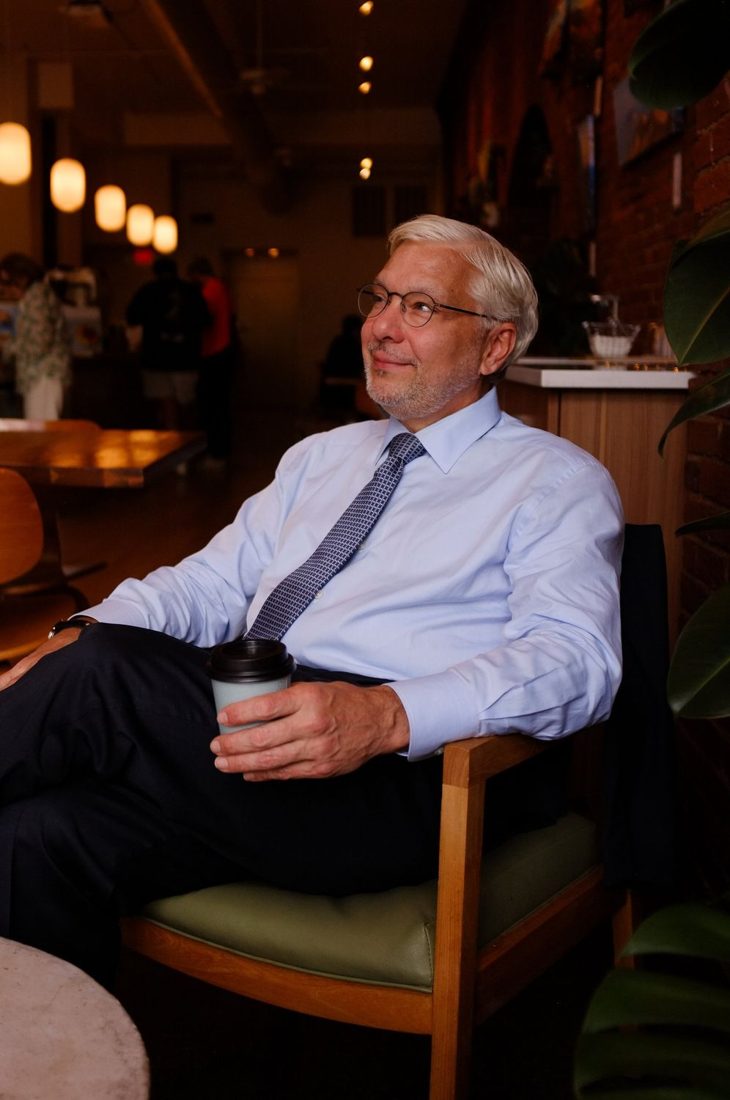
Gabriel Ramsey
Writer, strategist and lifelong student of how people make things of value together.
For twenty-five years I have worked where technology, culture and conflict meet: in Silicon Valley, Hollywood, Washington and across Europe, with engineers, artists, founders and the occasional jazz legend. At core, I am an anthropologist and a strategist. These days I write about what all of that taught me, and I am curious about almost everything.
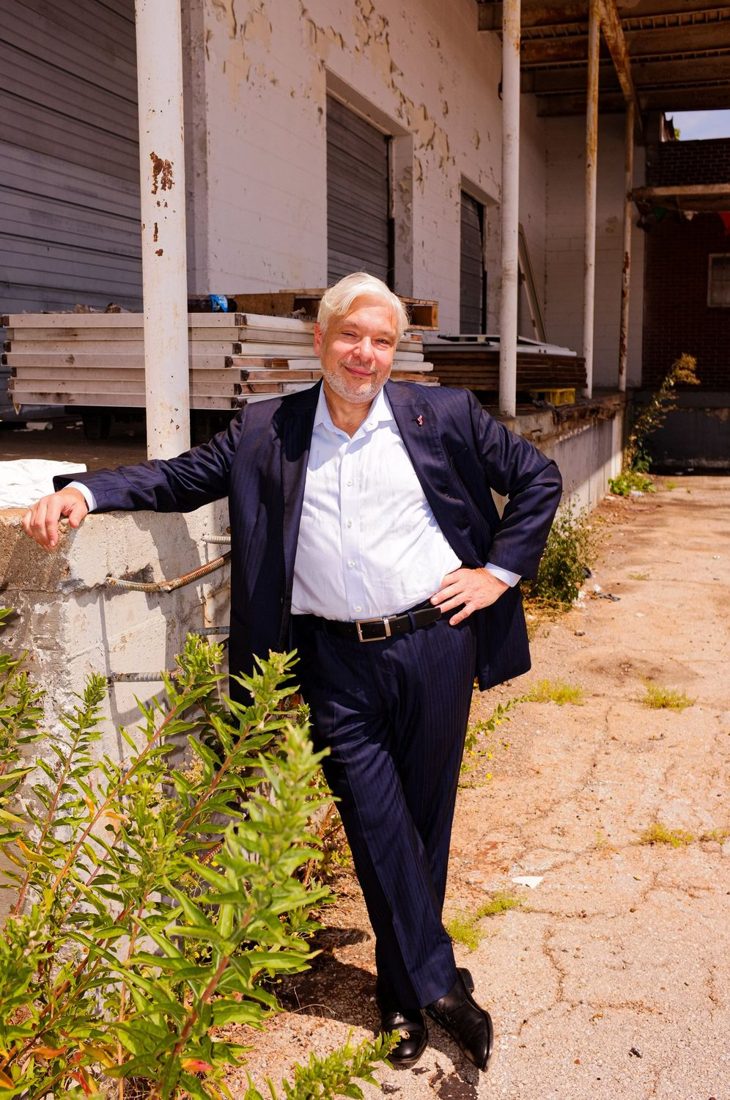
Hello.
I’m Gabe. I’m interested in a question that has followed me through every chapter of my life: how do people create value together, and why does it so often leak away in the spaces between them?
I first came at that question as a cultural anthropologist, studying how communities in post-Soviet Eastern Europe held on to old ways of living while new ones arrived. I came at it again as a software product manager, learning that you cannot fix what you cannot reproduce. And I lived inside it for more than two decades in high-stakes technology and media disputes, where I learned how deals, products, partnerships and organizations actually come apart, and what it takes to hold them together.
Along the way I sat on the board of a string quartet, helped a pioneering jazz singer look after her recordings and royalties, wrote about video games and digital culture, worked alongside law enforcement to take down criminal networks, and argued in some of the cases that shaped how software and artificial intelligence are treated today.
Now I write, advise people building interesting things, and spend a lot of time thinking about what remains distinctly human as machines get better at the rest. I believe in radical creativity, careful listening, good wine, deep house on vinyl, and the idea that most problems become solvable once someone describes them honestly.
A life in several rooms
Not a resume. Just the rooms that shaped how I think.
Rural America, and what it taught me
I grew up in small towns in the Ozarks, central Missouri and West Virginia. I watched people struggle. I saw how the global economy doesn’t necessarily deal everyone in. I watched how people organized themselves locally in ways that were very valuable, but often intentionally isolating. In high school I sang second tenor in an a cappella quartet that played paid gigs across mid-Missouri. Like many kids in the vast interior, I wanted to see the world! At eighteen I left for Massachusetts.
Anthropology, and a year in Hungary
At University of Massachusetts, Amherst I studied cultural anthropology, with a focus on Eastern Europe after the Soviet era. I learned Russian and Hungarian, spent a year at the University of Pécs, excavated a Pocumtuck village archaeological site in the Connecticut River valley, and spent a season observing how orangutans comfort one another. I have been an anthropologist at heart ever since.
Software
I landed in Northern California in 1996, during the heart of the dot-com boom. I learned how the technology industry works from the ground up. I tested video games and desktop publishing tools, then worked as a product manager getting products out the door on time. It was my first lesson in how things break, and in how much of building anything is translation between people who think differently.
Two decades inside technology conflict and revolution
I went to law school at the University of California, Berkeley, where I edited the Berkeley Technology Law Journal, and then spent about twenty-four years as a litigator and strategic counselor in Silicon Valley and San Francisco, as a partner at Orrick, Herrington & Sutcliffe and later at Crowell & Moring. I worked for and against some of the most consequential companies in technology, entertainment and media, frequently on problems where the law had not yet caught up with the technology. I worked on Oracle v. Google, the long-running dispute over whether software interfaces can be copyrighted. I spent years alongside Microsoft’s Digital Crimes Unit, the FBI and international partners using civil courts to dismantle botnets and other criminal infrastructure. I was involved in one of the earliest cases about using copyrighted material to train artificial intelligence. I advised video game studios, film and television companies, chipmakers, platforms and startups, and I spent a lot of time in Washington and Brussels on technology policy.
I also helped run things: practices, recruiting efforts, innovation programs and committees, with real responsibility for people and for the bottom line. I no longer practice law. What I kept is a habit of reverse engineering, of asking how a plan will fail before it does, and a deep respect for the people on the other side of the table.
Things that matter: Music, the arts and human dignity
It has always been important to me to find animating energies through acts of creation and giving. I have tried to place myself in contexts where I can learn through both. For more than fifteen years I served as an agent, supporter and board member of a nonprofit string quartet, through its final season. For a similar stretch, I helped the avant-garde jazz vocalist Patty Waters with her recordings, royalties and return to the stage. And I spent two decades maintaining a handbook that helps immigrant entrepreneurs start businesses.
Writing, advising, building
I remain what I have always been: an anthropologist, a builder, a strategist, and a student of conflict. Right now I am building more than at any point in my life, with several new ventures underway that bring everything I have done into one place. I advise founders and leaders on their hardest problems, and the work keeps leading back to the same question: how people create value together, and what they owe one another. I seek out arts and tech communities around the world, lend a hand where I can, and keep learning. And I am writing a long essay about small rooms: places where art is made and peace is found, and which are sometimes the main character in the story.
What I’m thinking about
A few questions I keep returning to. The essays below take them further.
The human core of value.
As machines become extraordinarily good at executing well-defined tasks, the scarce things shift toward judgment, trust, taste, relationships and the ability to describe a messy situation honestly. I’m interested in what that means for how we work, what we teach, and what we pay for.
Problems that belong to no one.
The most expensive problems in any organization tend to live between departments, disciplines and people. Every culture has invented go-betweens to handle them, from Ottoman interpreters to marriage brokers. I think about why those roles keep being reinvented, and why they matter more now.
Provenance and trust.
Where did this come from? It’s the oldest question in commerce, from Burgundy wine to rare records, and it has become the central question for artificial intelligence and the people whose work it learns from.
Markets and their keepers.
What is a fee actually for? Medieval fairs, Moroccan bazaars and modern app stores all have to answer the same question, and the answer decides whether people stay.
Language as something woven.
For the Dogon people of Mali, the word for woven cloth is the same as the word for speech. I’m fascinated by language as action rather than mere description, and by what large language models reveal about how meaning is made.
Small rooms.
Hotel rooms, borrowed rooms, cells and garrets. Dostoevsky’s characters are almost always introduced in a small room, and so, often, are the turning points of our lives. This is the subject of the long essay I’m writing now.
Essays
Longer pieces on people, value and the institutions we build to trust each other.
The Human Core of Value
What we are really paying each other for and why the question matters now. On why professionals become priests, bartenders and confidants, and what that reveals as machines take on more of the work.
Read the essay →The Problem That Belongs to No One
On orphan problems, the go-betweens every culture invents, and a string quartet with no conductor. Why judgment that crosses boundaries matters more as machines get faster.
Read the essay →Where Things Come From
A forged vintage of Burgundy, the dead wax on a twelve-inch record, the kula ring and the largest act of borrowing in history: on provenance, trust and the machines that learn from us.
Read the essay →The Keeper of the Fair
Rhine toll castles, the great fairs of Champagne, a Moroccan bazaar and today’s app stores. On what a marketplace’s fee is actually for, and what happens when the buyer is a machine.
Read the essay →“This Is Mine”
Rousseau, tacit knowledge, open source as a gift economy, and the new enclosure of the open web. On the invisible things we own, and why they are now most of what anything is worth.
Read the essay →Earlier writing
A selection from twenty-five years of writing about technology, culture and law.
- “Cybercrime Disruption Through Civil Litigation and Equitable Remedies,” Lawfare
- “IP and Business: IP in the Brave New World of User-Created Computer Games,” WIPO Magazine (2007)
- “Digital Rights Management Backlash: New Battles in the Old Content War,” Law.com (2006)
- “The War on Cybercrime: How Far Can You Go?” Corporate Counsel (2013)
- “Right-of-Publicity Claims and Their Impact on the Gaming Industry,” TechCrunch (2013)
- “The Communications Decency Act Safe Harbor: Pendulum Swings in 2018,” Bloomberg Law (2018)
- “Databases in the Biological Sciences: A User’s Guide to the Current Copyright Landscape,” Plant Physiology (2003)
A few things I’ve learned
- Most problems become solvable the moment someone describes them in words everyone involved accepts.
- A string quartet has no conductor. The best teams I’ve seen work the same way: everyone listening, leadership passing quietly from one person to the next.
- The order in which you do things often matters more than any single thing you do.
- Deciding what not to do is the least visible and most valuable kind of decision.
- Failure is information, not shame. Treat it that way and people get braver and smarter.
- Most disagreements are two people using the same word to mean different things.
- Great art outlives the business built around it. The people who make it deserve careful stewardship.
- Ask how a plan will fail before you fall in love with it.
- A good bottle, a good record and a good conversation all reward patience.
Off the clock
The things I’d talk about at dinner, given half a chance.

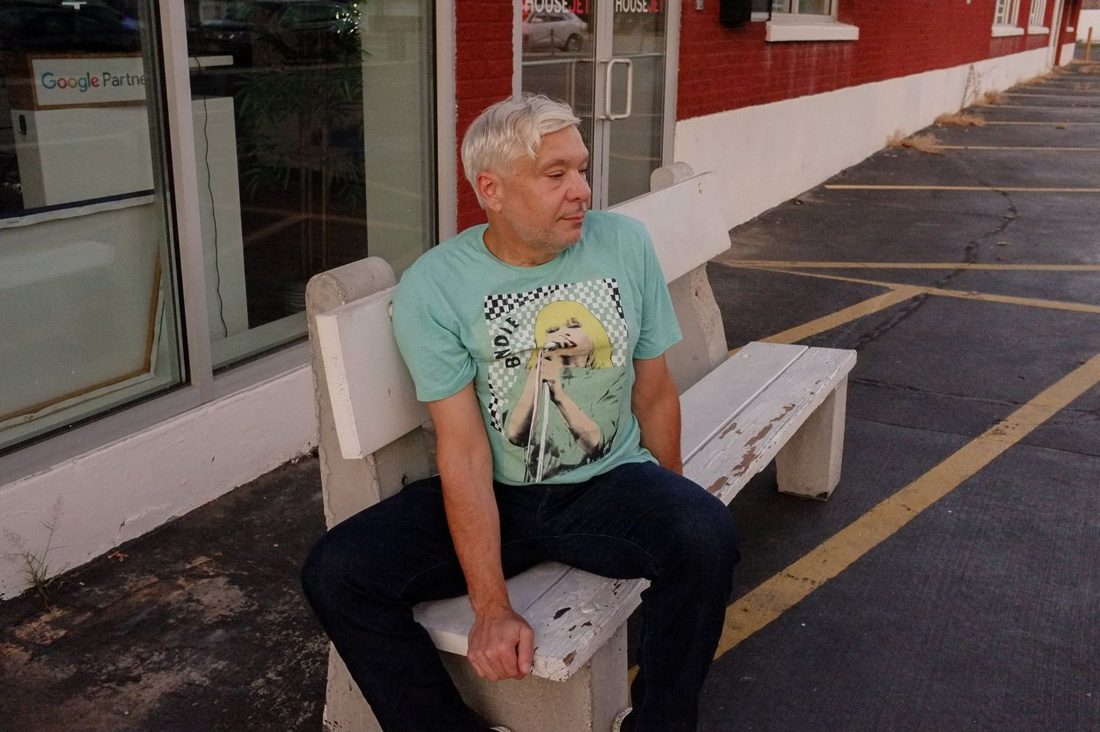
Music.My taste is rooted in groove: San Francisco deep house, French disco and nu-disco, West Coast cool jazz, golden-age hip-hop, nineties indie rock, Southern and roots rock with an Ozarks accent, and chamber music. I collect limited-run twelve-inch records from small European labels and keep long, obsessively curated playlists. Sarah Vaughan, Cat Power, Jay-Z’s Reasonable Doubt and the Lemonheads all live comfortably on the same shelf.
Wine.Red Burgundy is my center of gravity, Nuits-Saint-Georges in particular, followed by Northern Rhône Syrah, great Napa Cabernet and cool-climate Pinot Noir. I keep tasting notes that are more honest than they are dignified.
Books.I read literary fiction with a dark, satirical or philosophical edge: DeLillo, Pynchon, Roth, Beatty, Joseph Roth, Koestler, Dostoevsky, Kafka, Baldwin and Didion, plus big-idea science fiction like Liu Cixin’s The Three-Body Problem. My long-standing online handle, “apokrif,” comes from a poem by the Hungarian poet János Pilinszky.
Film.Film noir first, especially California noir: corruption and longing under endless sunshine, from Double Indemnity to Chinatown to Mulholland Drive. Also European auteurs, smart crime films, and the occasional John Waters picture for balance.
Games.I worked on PC titles early in my career and spent years around the game industry. Shooters are my genre and Gears of War is my favorite.
Travel and movement.I am happiest by the water or in the desert, in Santa Fe, Ojai and Palm Springs, and in the cities of Central Europe I studied in years ago. I still want to make a proper visit to Japan. At home I cycle, lift, run and dance whenever there is a good DJ.
Let’s talk
Over the years I’ve spoken in places as different as the Game Developers Conference, a debate on AI and art in Lisbon, a cybersecurity conference in Vancouver and lunchtime seminars for students at Berkeley. I enjoy conversations with writers, artists, founders, students, researchers and anyone thinking seriously about how people and technology will get along.
If you’d like to talk about an idea, a project, an essay, a podcast or a panel, I’d be glad to hear from you.
Frequently asked questions
Who is Gabriel Ramsey?
Gabriel Ramsey is a writer and strategist who writes about how people create and share value, including trust, provenance, markets, art and the role of human judgment as artificial intelligence advances. He has spent about twenty-five years working in technology, entertainment and media, including roughly twenty-four years as a litigator and strategic counselor, and was trained as a cultural anthropologist.
What does Gabriel Ramsey write about?
His essays explore the human side of value creation: why the most expensive problems fall between people and departments, why provenance and trust have become central to artificial intelligence, what marketplaces and platforms owe the people who use them, and why intangible things now make up most of what companies are worth. He is also writing a literary essay on small rooms in literature and life.
What is Gabriel Ramsey’s background?
He studied cultural anthropology at the University of Massachusetts Amherst, graduating cum laude, and spent a year studying at the University of Pécs in Hungary. He worked in software testing and product management during the dot-com boom, earned his law degree from the University of California, Berkeley, and practiced for about twenty-four years in technology, intellectual property, cybersecurity and media matters, as a partner at Orrick, Herrington & Sutcliffe and Crowell & Moring. He served for more than fifteen years on the board of a nonprofit string quartet and helped jazz vocalist Patty Waters with her recordings and royalties.
Where is Gabriel Ramsey based?
He divides his time between San Francisco, Los Angeles and New York.
How can I contact Gabriel Ramsey?
By email at contact@gabrielramsey.com.